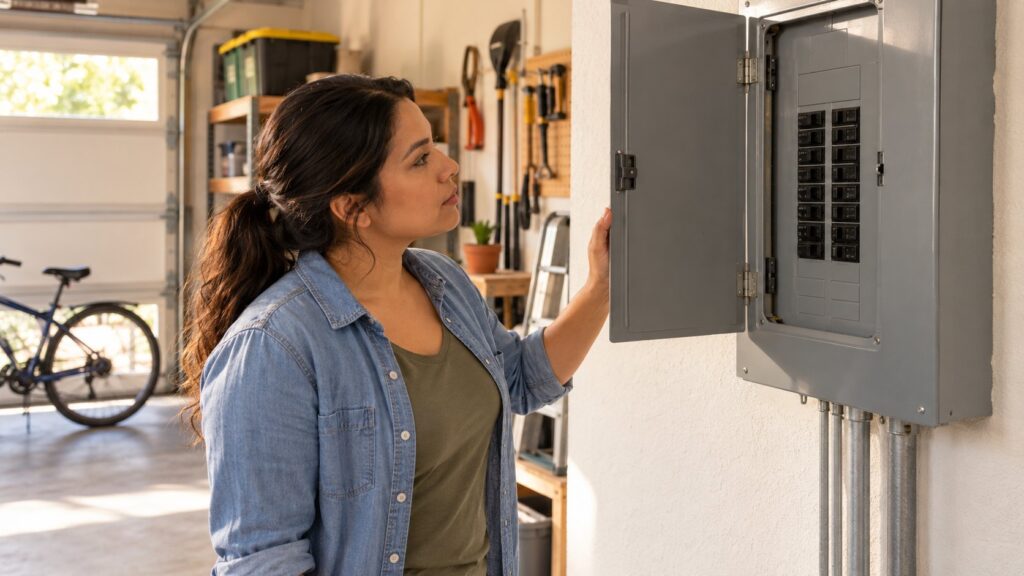
The breaker, or circuit breaker, protects the wiring in your home. When it detects something dangerous, it cuts the power. These are the three most common causes.
1. Overload
It happens when you plug more devices into one circuit than that circuit can handle, for example a heater, a hair dryer and a microwave at the same time. The wire starts to heat up and the breaker cuts it off before it becomes dangerous.
2. Short circuit
It happens when a live wire touches another wire or a metal part because of damage, a faulty appliance or a loose connection. The current spikes and the breaker trips instantly.
3. Ground fault
The current escapes along a path it should not take, for example through water. That is why bathrooms, kitchens, outdoor areas and garages use GFCI devices, which detect that leak and cut the power in a fraction of a second.
What about AFCIs?
AFCI devices detect electrical arcs, sparks that occur in damaged wires or loose connections and that can cause fires. They are used on many bedroom circuits.
An important tip
If a breaker trips over and over, do not force it or replace it with a larger one: it is a sign that something on that circuit needs to be checked. In Florida, electrical work that requires a license must be done by someone who holds the state license.
In the Residential Electricity course you understand how the circuits, breakers and protections of a home work, with interactive practices.
Educational content from Learning Trade Center of Florida.