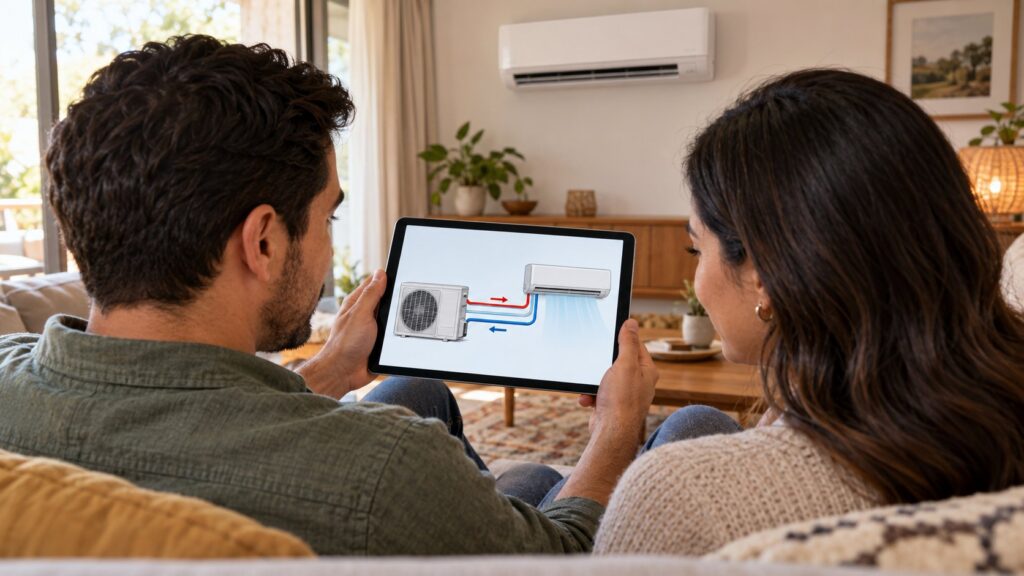
An air conditioner does not “make” cold: it takes the heat out of your home and carries it outside. It does this with a refrigerant that circulates nonstop through four components.
1. The compressor
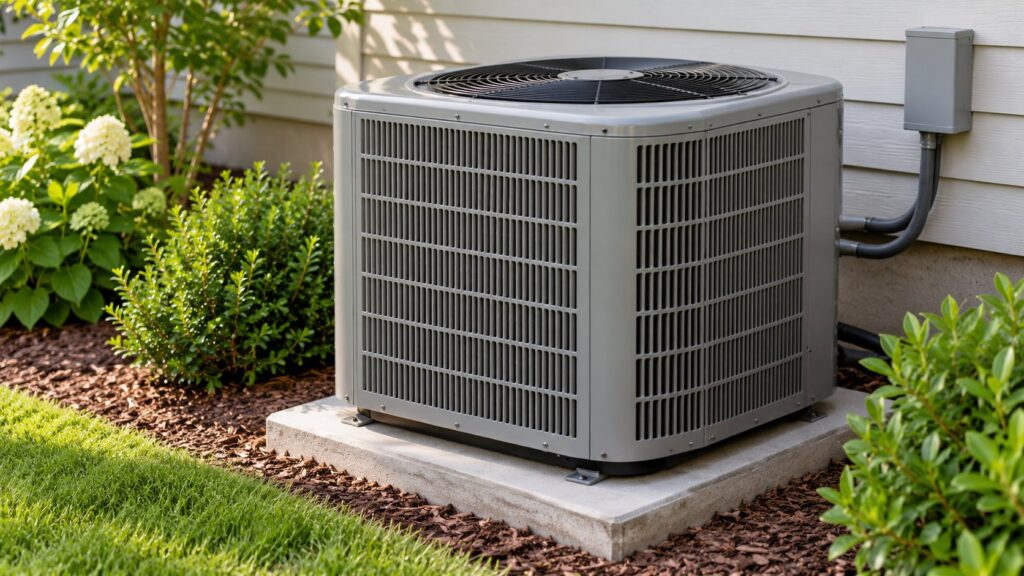
It is in the outdoor unit. It compresses the refrigerant while it is a gas, which raises its pressure and temperature.
2. The condenser
Also outside. The hot gas flows through its tubes and the fan removes the heat. As it cools, the refrigerant turns into a liquid.
3. The expansion device
It can be a valve or a small tube. It makes the liquid refrigerant drop sharply in pressure, which makes its temperature drop a lot.
4. The evaporator
It is inside, in the ceiling, wall or closet unit. The cold refrigerant flows through its tubes and the fan blows the home’s air across them: the air cools down, and the refrigerant absorbs that heat and turns back into a gas. From there it returns to the compressor and the cycle starts again.
What about humidity?
As air passes over the cold evaporator, its moisture condenses into water droplets. That is why air conditioners have a drain: besides cooling, they dry the air.
What about heating?
A heat pump uses the same cycle in reverse: with a reversing valve it takes heat from the outdoor air and brings it inside.
In the HVAC Technician Combo you follow this cycle in animations and interactive practices, and learn each component step by step.
Educational content from Learning Trade Center of Florida.