Many English learners get frustrated with grammar books and tests that look nothing like real life. They spend years studying rules and, when the time comes to talk to a neighbor, at a store or to a doctor, their mind goes blank. The difference is in how you learn.
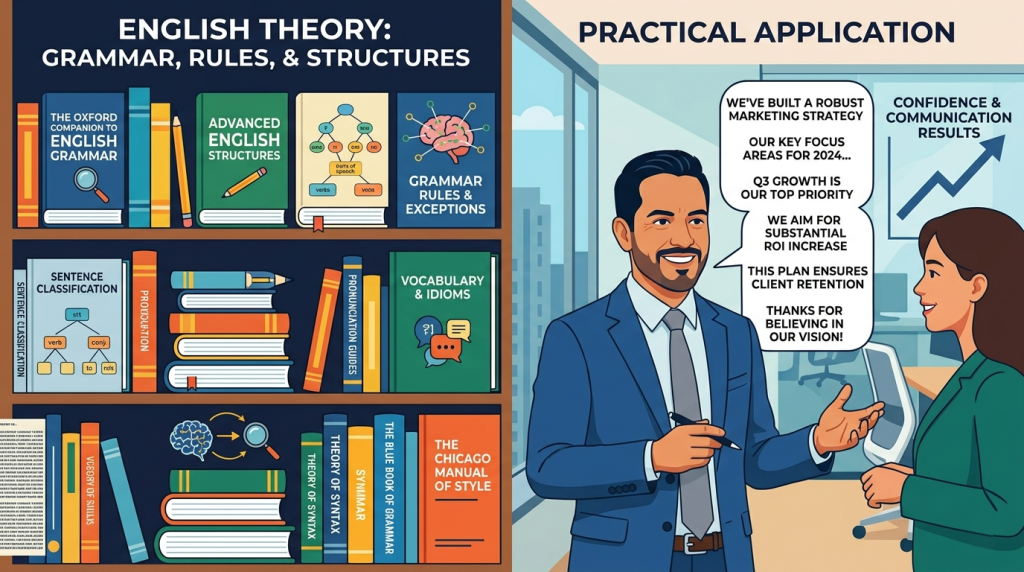
Academic English
It focuses on rules, verb tenses and vocabulary lists. It helps you pass exams and is useful as a foundation, but it often doesn’t prepare you for a fast conversation, with different accents and phrases that aren’t in the book.
Practical English
It starts from the real situations you face in the United States and gives you the phrases you need to handle them:
- Introducing yourself and talking about yourself with confidence.
- Understanding instructions and asking questions when something isn’t clear.
- Requesting a service or solving a problem over the phone.
- Talking to the doctor, at your children’s school or at a government office.
Why it works better
- You use it the same day: what you learn in the lesson, you practice in your daily routine.
- You build confidence: every conversation that goes well encourages you to try the next one.
- Grammar comes in context: you learn the rule when you need it to say something specific, and that’s why it sticks.
How to get started
Choose a method that combines audio, reading and short exercises based on real situations, and practice a little every day instead of studying for many hours on a single day. What matters is consistency.
A good trick: each week, pick one situation from your life (the grocery store, a doctor’s appointment, paperwork) and prepare the five or six phrases you will need most. Say them out loud, listen to them in audio and use them as soon as you get the chance. In a few weeks you will notice the difference.
Your next step
Discover True ESL, the practical English program from Learning Trade Center of Florida (page in Spanish), designed for Spanish speakers who live in the United States. Questions? Call us at 407-634-7948.