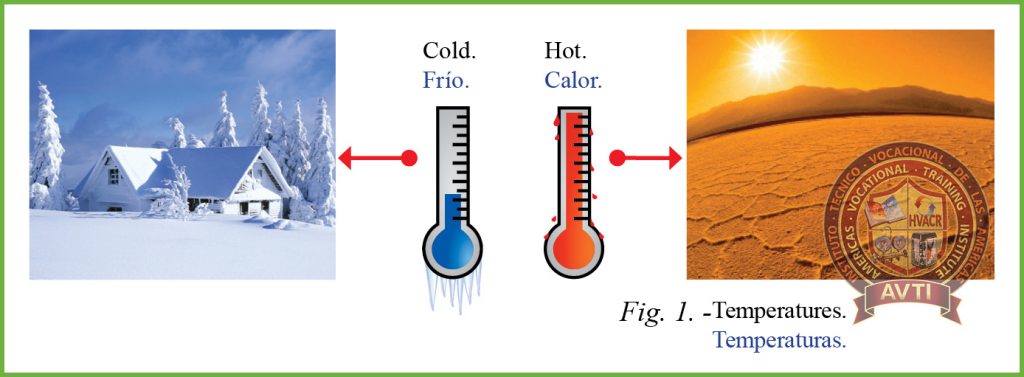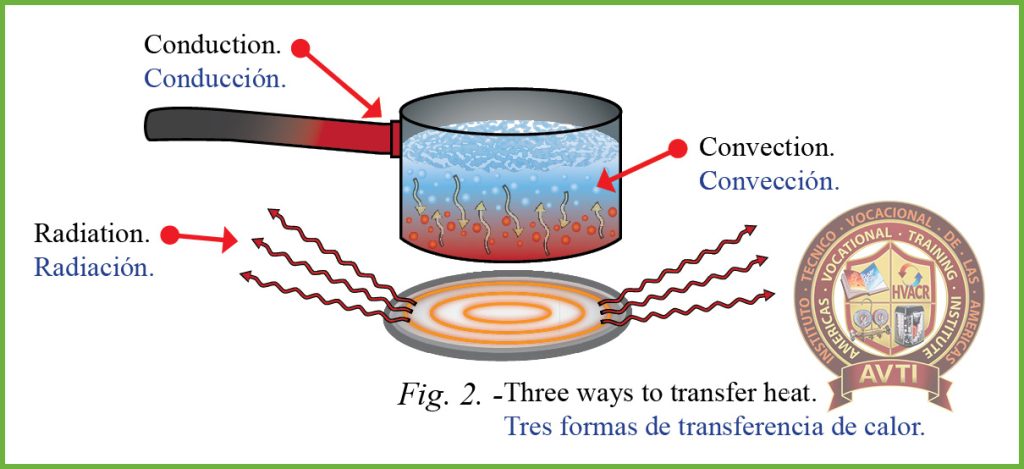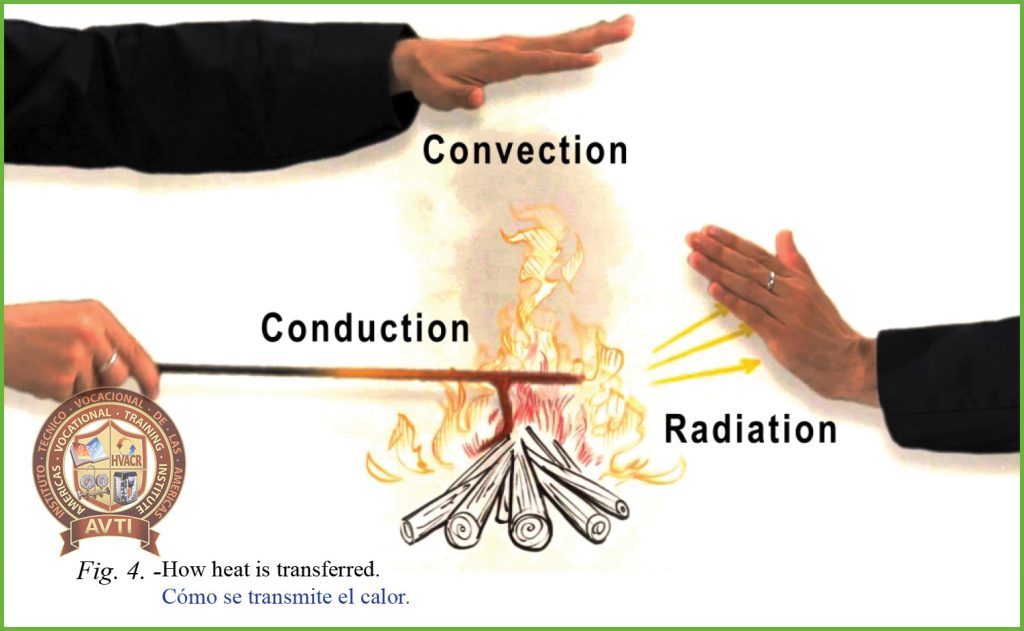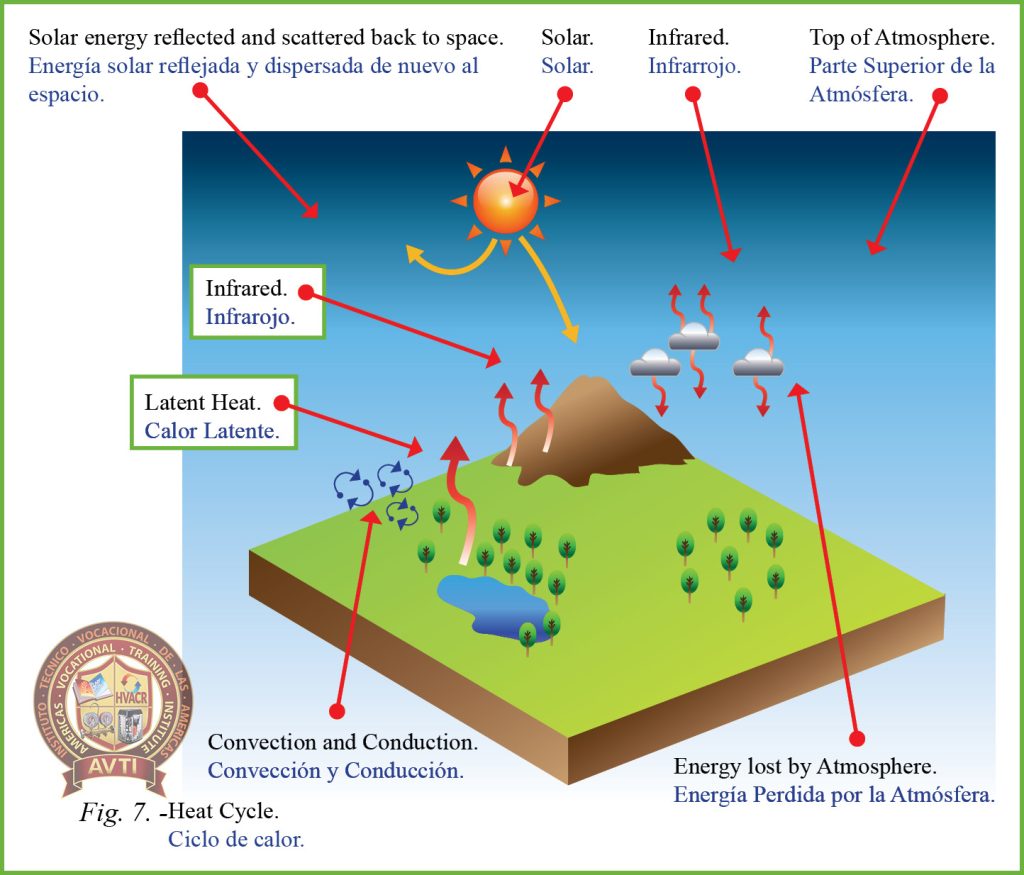
The lack of heat describes the common term “cold”. To maintain cool temperatures, the heat must be removed faster than it enters (fig. 1). Heat is a form of energy that is always in motion traveling from hot to cold as stated by the Second Law of Thermodynamics. When heat travels, its pace is determined by the difference of another temperature. It is important to remember that if there is a substantial difference between the two temperatures, then the heat will travel faster. When heat travels, it can be transferred from one substance to another. When transferring heat, there are three methods that can be used:
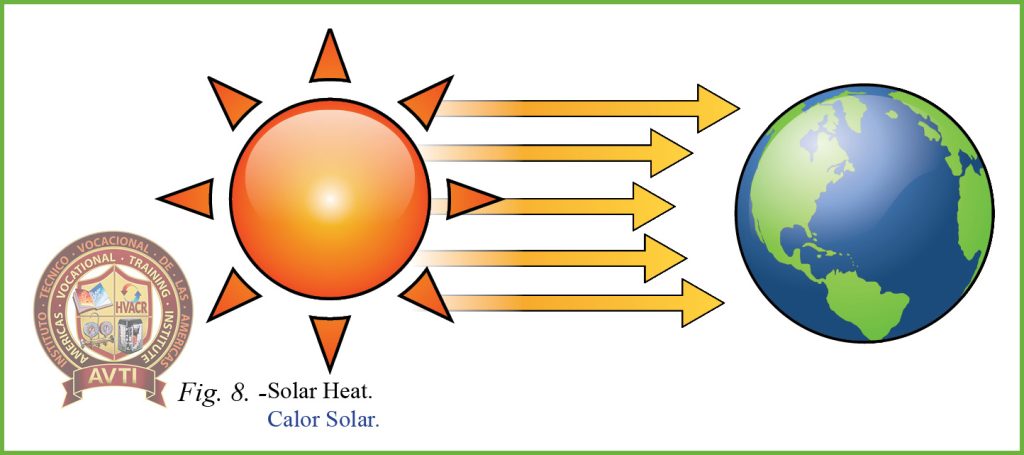
- Radiation – Radiant heat is energy in the form of electromagnetic waves which passes through air, but is absorbed by objects.
- Conduction – Flow of heat through a substance such as metal, iron or copper.
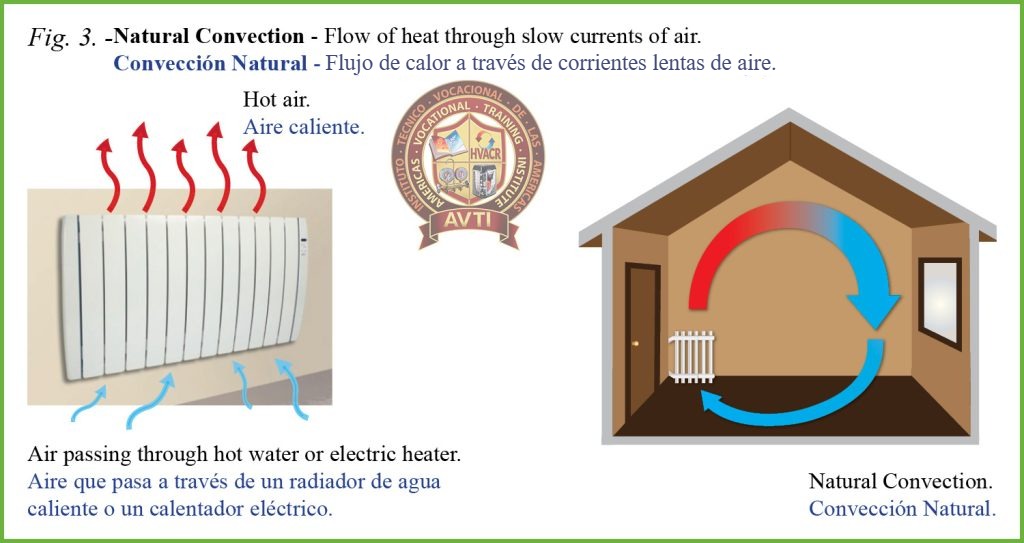
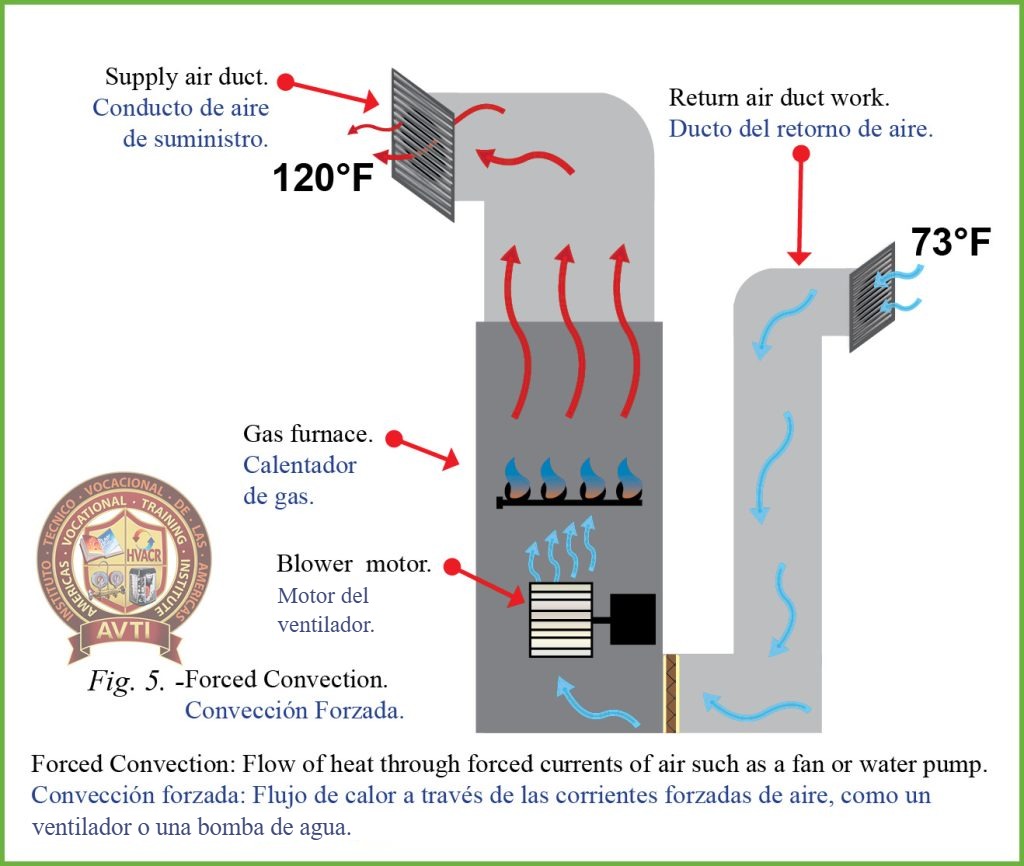
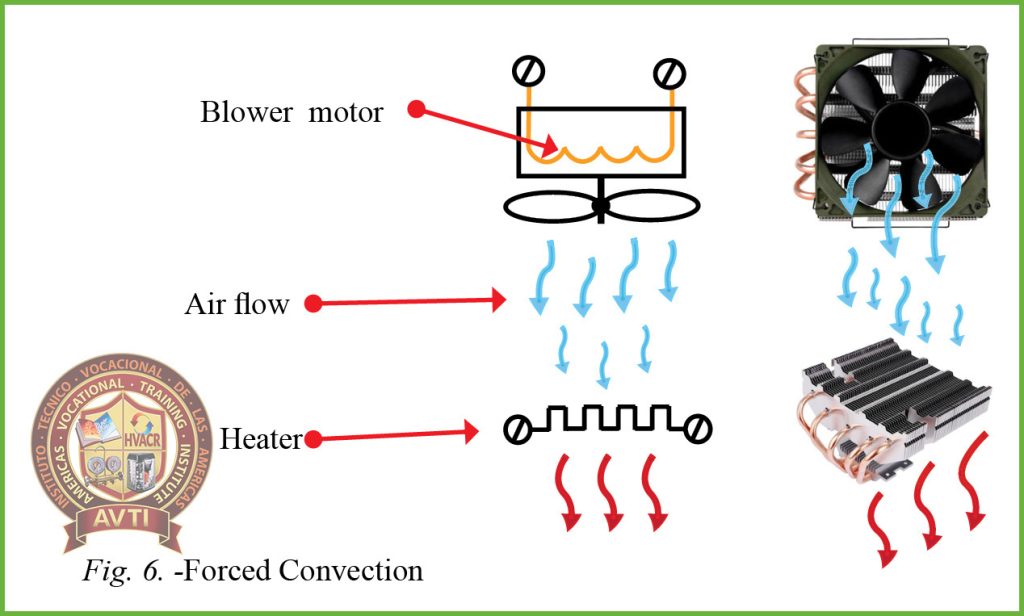
- Convection – Heat flow carried by a moving fluid such as air or water.